
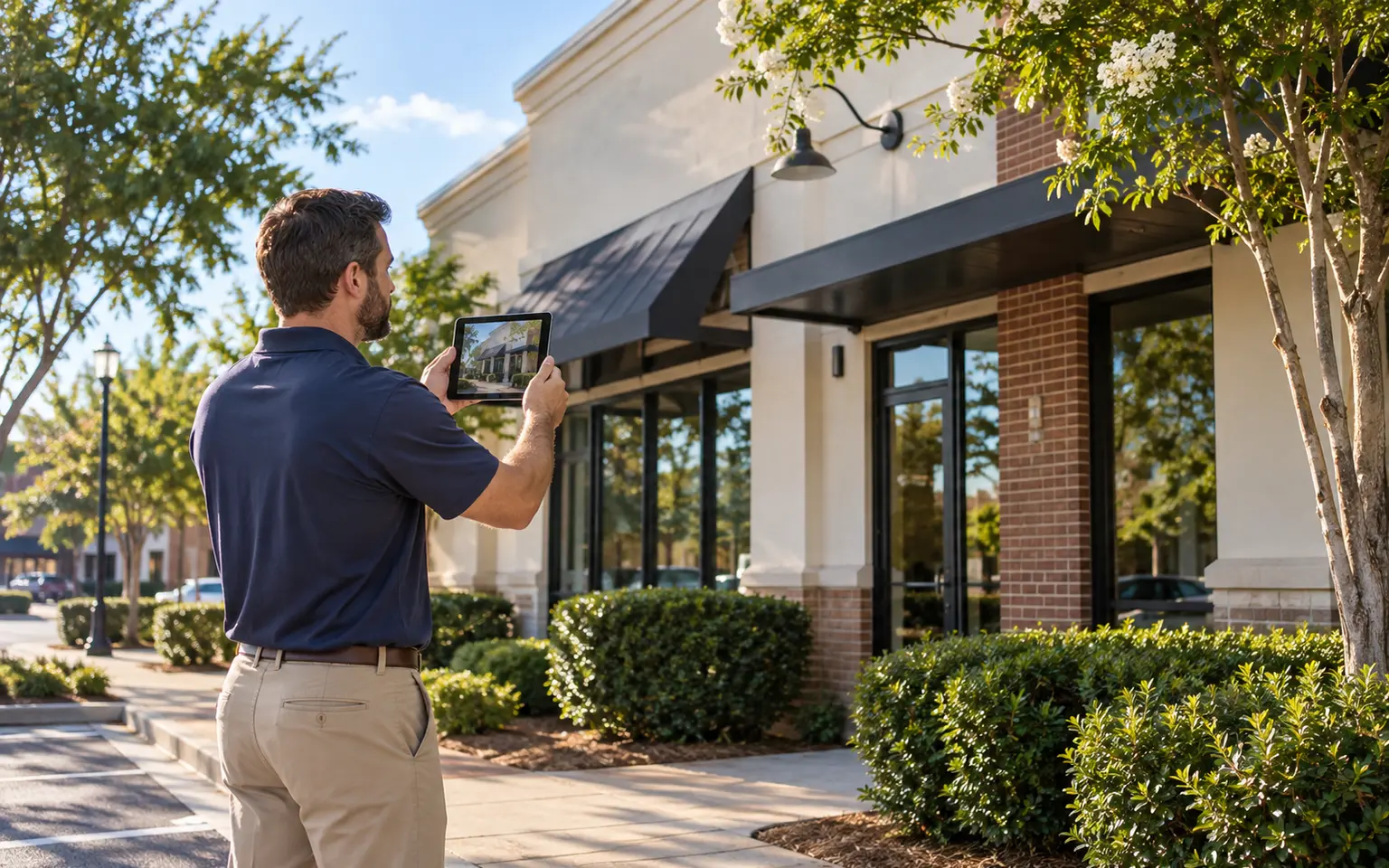
A field inspection is a factual snapshot. It can confirm location, visible occupancy indicators, posted notices, exterior condition and other client-defined observations. It does not diagnose hidden defects or establish value, code compliance or structural safety.
Define the assignment before dispatch
- Property address, client reference number and authorized contact.
- Exterior-only or authorized interior access, with entry instructions.
- Required views, labels, forms and photo sequence.
- Occupancy or business-verification questions that may be answered through observation.
- Deadline, revisit authority and instructions for unexpected conditions.
On-site procedure
- Confirm the address and match the assignment to the property.
- Observe from authorized, safe locations without forcing entry or creating a disturbance.
- Capture the required overview, identifying and condition photographs.
- Record objective observations, timestamps and access limitations.
- Escalate safety concerns, conflicting instructions or conditions outside the approved scope.
What a useful report includes
- Assignment number, date, time and verified location.
- Required photographs with understandable labels or sequence.
- Visible condition observations stated without speculation.
- Access status and any portion of the assignment that could not be completed.
- Relevant exceptions, safety concerns or client-approved follow-up steps.
What the report does not establish
A photograph may show a visible crack, stain, broken window or posted notice, but it does not establish the cause, age, legal effect or repair cost. Similarly, occupancy indicators are observations—not a determination of tenancy, ownership or abandonment.
Questions to ask before scheduling
- What decision should the report help the client make?
- Which exact photographs and observations are required?
- Is interior access authorized, and who will provide it?
- May the inspector contact an occupant or business representative?
- What should happen if the property is inaccessible or unsafe?
Request a field-service visit
Provide the address, access limits, required observations and photo list. Magnolia Metro will confirm the assignment scope and price.
Request field services